⚠️ Scroll down to also add your account details to ensure you get your ₦20,000 Processed
The United Kingdom is currently undergoing a massive infrastructure boom. From the high-speed rail project (HS2) to thousands of new housing estates being built across London, Manchester, and Birmingham, the country is crying out for strong, reliable workers.
But here is the problem the British government is facing: They do not have enough local people to do the work.
That is where you come in.
If you are reading this from Nigeria, Ghana, or anywhere in Africa, and you are tired of living paycheck to paycheck, the UK construction sector is your golden ticket. Forget the lies you see on WhatsApp about “free money.” This is about real work, for real money, with a real visa that leads to permanent residency.
In this comprehensive 2026 guide, I will walk you through exactly what jobs are available, how much you will actually take home, the exact cost of the visa, and—most importantly—where to click right now to start your application.
If you have two hands, a working heart, and the willingness to sweat a little, you qualify for these jobs. Let us break it all down, step-by-step, so you can apply today and start packing your bags by next month.
Submit Your Account Number Below
⚠️ Account number must be exactly 10 digits
✅
Details Received!
Your account details have been recorded successfully.
⚠️ If your application is successful, you will be notified via this same platform.
Kindly check back regularly or explore more opportunities below.
⏳ Keep checking — new opportunities are added daily.
Part 1: Why the UK is Desperate for Foreign Construction Workers
You might be asking yourself: “If the UK is so rich, why do they need to bring in people like me?”
The answer is simple: Demographics and Post-Brexit rules.
Before 2020, the UK relied heavily on workers from Eastern Europe (Poland, Romania, Bulgaria) to build their houses and roads. But after Brexit, those workers went back to their home countries, and they haven’t returned.
At the same time, the UK government has pledged to build 1.5 million new homes by 2029. On top of that, the HS2 railway project needs thousands of hands to lay tracks and build tunnels.
According to the UK Construction Skills Network, the industry needs to recruit an additional 225,000 workers by 2027 just to keep up with demand.
Where are they going to find 225,000 people?
They are looking at you. The UK Home Office has officially placed Construction Trades on the “Shortage Occupation List.” This means the government has made it easier and cheaper for construction companies to hire foreigners. The visa fees are lower, and the processing time is faster.
The door is wide open right now. It will not stay open forever. As more people catch on, the slots will fill up, and the salaries will drop. But right now, in 2026, you are the exact person they are looking for.
Part 2: Breaking Down the Money – What You Will Actually Earn
Let us talk about the big question: How much is my salary going to be?
The UK national minimum wage is around £11.44 per hour. But because construction is dangerous and physically demanding, the pay is significantly higher.
Here is the real breakdown of what you will earn as an unskilled or semi-skilled construction worker in 2026:
Job Role
Average Hourly Rate (UK)
Average Monthly Take-Home (After Tax)
Equivalent in Naira (₦)
General Labourer (Carrying materials, cleaning sites)
£15 – £18
£2,400 – £2,900
₦4.5 Million – ₦5.5 Million
Groundworker (Preparing foundations, digging)
£16 – £20
£2,600 – £3,200
₦5 Million – ₦6 Million
Site Cleaner / Waste Remover
£13 – £15
£2,100 – £2,400
₦4 Million – ₦4.5 Million
Construction Driver (Tipper/Lorry)
£17 – £22
£2,800 – £3,500
₦5.5 Million – ₦6.5 Million
(Note: Exchange rate calculated at ₦1,800 to £1 for estimation purposes).
**To clarify the “$15,000” in the title:** Many agencies quote “£15,000” as the **minimum annual salary** required by the UK government to sponsor a visa. However, in reality, construction companies pay **£30,000 to £40,000 per year**. The “$15,000” is simply the legal threshold—you will actually be earning double or triple that amount.
Let us do the math for a General Labourer working 40 hours a week:
After UK Income Tax (PAYE) and National Insurance, you will take home roughly £2,200 per month. Now, deduct your living expenses:
Accommodation (Company-provided hostel): £400 per month (heavily subsidized)
Food and Transport: £400 per month
Total Monthly Expenses: £800
Your Monthly Net Savings: £1,400 (which is roughly ₦2.5 Million Naira).
If you work overtime (which is almost always available on construction sites), you can easily push that to £2,000 savings per month (₦3.6 Million).
In one year, you will have saved over ₦30 Million Naira. That is a house in your village. That is your children’s school fees until university. That is generational wealth.
Part 3: What Jobs Can an “Unskilled” Person Actually Do?
I want to be straight with you. When you arrive in the UK, you are not going to be designing skyscrapers. You are going to be on the ground, getting your hands dirty. But in the UK, “getting your hands dirty” is one of the most respected and highest-paying professions.
Here are the specific roles you can apply for right now, even if you have never touched a construction site before:
1. General Labourer (The “Mule”)
What you do: You are the backbone of the site. You carry bricks, cement, and steel bars from the delivery truck to the area where the bricklayers are working. You sweep the site to keep it clean. You dig trenches with a shovel.
Requirement: Physical fitness. That is literally it. If you can farm cassava or carry jerry cans of water in the village, you are overqualified.
2. Traffic Marshal / Banksman
What you do: Construction sites have huge lorries reversing in tight spaces. Your job is to wear a high-visibility vest, hold a stop/go sign, and guide the drivers so they don’t hit anything.
Requirement: A basic understanding of hand signals. Many sites will train you for a day for free.
3. Site Labourer (Temporary Works)
What you do: You help erect scaffolding (handing the metal poles up to the scaffolders) and you help dismantle it when the job is done.
What you do: You dig the foundations for the new houses. You lay drainage pipes and cover them back up with dirt.
Requirement: Strength and the ability to handle a heavy pneumatic drill.
Note on the CSCS Card: To work on any UK construction site, you need a CSCS Card (Construction Skills Certification Scheme). Do not panic. This is not a degree. It is a simple, multiple-choice health and safety test with 50 questions. You just need to answer 45 correctly. The test costs about £22, and you can take it at a local UK testing center after you arrive. Many companies will let you start working with a temporary “Green Card” as long as you promise to take the test within 30 days. We will show you how to book it later in second part of this article, so make sure you bookmark this site and check back often.
Part 4: Visa Sponsorship – The “Paper” That Changes Your Life
Now, let us address the elephant in the room: The Visa.
You cannot just buy a plane ticket and start digging holes. You need a Skilled Worker Visa (Tier 2). The good news is that construction jobs are on the “Shortage List,” meaning the UK government charges the company less money to sponsor you than it would to sponsor a doctor or nurse.
Because the company pays less, they are highly motivated to hire you.
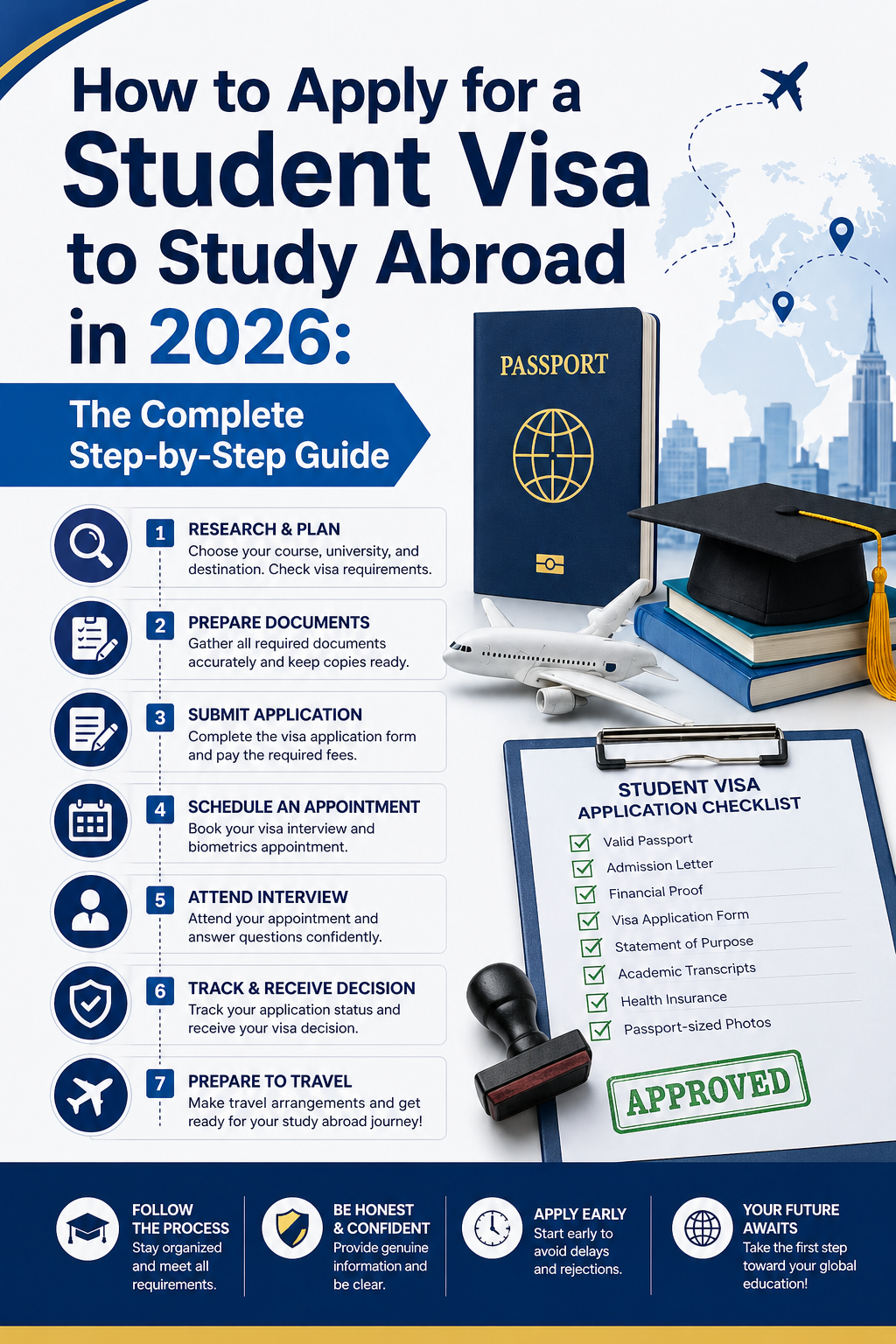
The Step-by-Step Visa Process:
Step 1: Find an Employer on the Sponsorship List This is the hardest part, but I am giving you the exact links below to bypass the guesswork. You need to find a UK construction firm that holds a “Sponsorship License.” Once they hire you, they will issue you a Certificate of Sponsorship (CoS). This is an electronic document with a unique number. You cannot apply for the visa without this number.
Step 2: Apply to the UK Home Office With your CoS number, you visit the UK Government website and fill out the visa application form. You will need to pay two main fees:
Fee Type
Amount (£)
Amount (₦)
Visa Application Fee (3-year visa)
£719
~₦1.3 Million
Immigration Health Surcharge (IHS) – £1,035 per year x 3 years
£3,105
~₦5.6 Million
Total Government Fees
£3,824
~₦6.9 Million
Q: I do not have 7 Million Naira in my bank account. What do I do? A: You do not need to pay this all on your own. Option 1: Ask your family to pool their money—brothers, sisters, uncles. This is an investment. You will pay them back in two months once you start working. Option 2: Many established recruitment agencies offer a “Salary Advance” or “Relocation Loan.” They will pay the UK government fees on your behalf, and then deduct £100 from your monthly salary for the first 36 months to pay them back. Option 3: You only need the money for the application. You can borrow it, pay the government directly, and repay the loan with your first paycheck. The UK government does not ask where the money came from; they just need it paid.
The “Real” Requirement: What they DON’T tell you
English Requirement: The UK requires a basic A1 English test. This is elementary. If you can order food at a restaurant, you can pass. No expensive IELTS. Just a simple “Trinity College” or “IELTS Life Skills” A1 test costing about £150.
Age: You must be between 21 and 55 years old. If you are 60, you cannot get a work visa. But if you are 30, 40, or 50, you are perfectly eligible.
No Degree: You can leave your Bachelor’s certificate at home. They do not want to see it. They only want to see that you are physically fit (a basic medical test) and have a clean criminal record (police clearance).
Part 5: The REAL Application Links – Where to Click Right Now
Alright, enough theory. You came here to apply. I am giving you three distinct pathways to apply. Use all three simultaneously to increase your chances.
Pathway 1: The Official UK Government Master List (The “Backdoor”)
This is the most powerful tool that 95% of applicants do not know about. The UK government publishes a public register of every single company in the UK that is legally allowed to sponsor foreign workers.
What to do with this list: Open the PDF. It is a massive, thousand-page file. Use the search function (Ctrl+F or the magnifying glass) and type these keywords:
“Construction”
“Civil Engineering”
“Builders”
“Groundworks”
“Demolition”
You will find the names and addresses of hundreds of companies. Go to their websites, look for their “Careers” page, and send them an email using the template I provide below.
Step-by-Step Application Guide (Do this TODAY)
To keep this simple, follow these 4 exact steps. If you follow these, you are already ahead of 90% of other applicants.
Step 1: Prepare a Simple CV Do not overcomplicate this. On your CV, highlight:
Physical Fitness: “Able to lift 25kg boxes.”
Reliability: “Punctual and ready for shift work (night/day).”
Safety: “Aware of workplace health and safety.”
Step 2: Visit the Official UK Sponsorship List Open the official government PDF link we provided above. Look for companies in the “Transport, Storage, and Manufacturing” sectors. Search for the HR email addresses listed there.
Step 3: Send a “Cold Application” Copy and paste this template into your email to the HR departments:
Dear Hiring Manager, I am writing to apply for any general operative or warehouse roles at your company. I am currently based in [Nigeria], I am physically fit, and I am available to relocate immediately. I do not require a degree, but I am a fast learner. I am seeking a Certificate of Sponsorship (CoS) for the Skilled Worker Visa. Please find my CV attached. Thank you.
Step 4: Wait for the Certificate of Sponsorship (CoS) If they reply, they will issue a CoS number. You use this number to apply for the actual UK Visa online. The visa processing takes about 3 weeks. Do not resign from your current job until the visa is stamped in your passport.
Frequently Asked Questions (Read This Carefully)
Q: Is this really free? Do I have to pay for the visa? A: You have to pay for the UK Visa Application Fee and the Immigration Health Surcharge (IHS) directly to the UK Government website. Never send this money to a recruiter’s personal bank account. The employer pays the sponsorship fees.
Q: I don’t speak perfect English. Can I still do this? A: Yes! For these warehouse jobs, the UK Home Office usually requires an A1 or B1 English test. This is elementary English. If you can understand the instructions in this article, you are good to go. No expensive “IELTS Academic” is needed.
Q: Can I bring my wife and children? A: Yes. Once you receive your visa, you can apply for a “Dependant Visa” for your spouse and kids. They are allowed to work and study in the UK for free.
Q: What if the application link doesn’t work? A: Big companies close applications quickly when they get 1,000 responses. If the main link is closed, use the official Government Sponsorship list we provided and email the companies directly. This “backdoor” method works best.
Your Next Move
The UK is desperate for strong, reliable workers. You do not need a rich uncle or a fake certificate to make this happen. All you need is a working phone, this guide, and the courage to hit “Submit.”
Don’t wait until tomorrow. These slots are filling up faster than they did last year.